Turnout Exercises: Building Strength and Control Safely
Turnout is one of the first things dancers learn to think about, but it is also one of the easiest things to force. Many dancers assume better turnout means stretching more or pushing the feet farther open. In reality, useful turnout depends on strength, control, and alignment.
Flexibility gives a dancer access to motion. Strength and control help the dancer use that motion without twisting through the knees, rolling through the feet, or gripping through the hips.
Why turnout is not just flexibility
True turnout comes mostly from the hip. The hip has to rotate, but it also has to stay organized while the dancer moves. That means the deep hip rotators, glutes, core, and standing leg all need to work together.
If a dancer has range but does not have control, turnout may disappear during jumps, turns, balance work, or fatigue. If a dancer tries to force more range than the hip can provide, the body usually borrows motion somewhere else.
Why forcing turnout can create stress
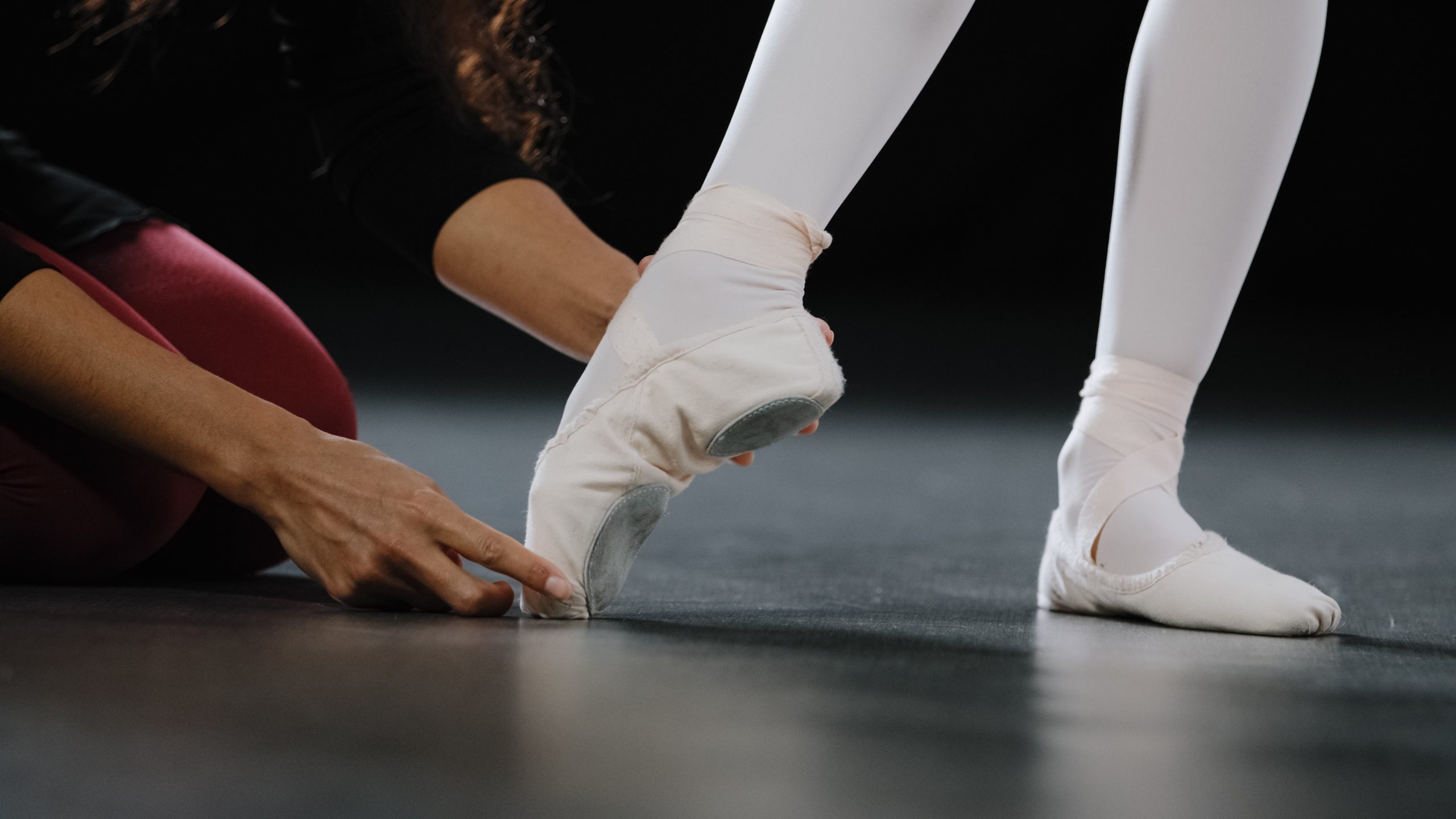
When turnout is forced from the floor up, the hips are no longer doing the full job. The feet may flatten, the arches may collapse, the knees may twist, or the ankles may take extra strain.
This does not mean dancers should be afraid of turnout. It means turnout should be trained with respect for the dancer’s anatomy. The safest turnout is the amount a dancer can control while moving, not the amount they can force while standing still.
How the video drills help
Passé with Ball
This drill challenges turnout control while the leg is lifted. The ball gives feedback and encourages the dancer to organize the hip without gripping or letting the pelvis shift.
Side Plank with Clam Combination
This exercise connects hip rotation with trunk and pelvic stability. That matters because turnout is harder to maintain when the body is moving, balancing, or tired.
Supine Leg Rotation
This drill helps the dancer feel rotation at the hip in a lower-load position. It can build awareness of whether the movement is coming from the hip or being borrowed from the pelvis, knee, or foot.
Consistency beats intensity
Turnout strength improves with steady, high-quality practice. More effort is not always better. If the dancer is gripping, holding breath, forcing range, or losing alignment, the exercise is no longer training the right thing.
Small, controlled repetitions are often more helpful than pushing to fatigue. The goal is to teach the body a better strategy, then repeat it until it becomes more natural in class and choreography.
Safety considerations
- Work in a range the dancer can control without twisting the knee or foot.
- Avoid gripping through the front of the hip or low back.
- Stop if there is sharp pain, pinching, numbness, or symptoms that linger after practice.
- Prioritize alignment and smooth control over bigger range.
When to see a physical therapist
A dancer should be evaluated if turnout work causes repeated hip, knee, ankle, foot, or back pain. It is also worth getting help if one side feels very different, turnout suddenly changes, or pain is affecting class, rehearsals, or performance.
A physical therapist who understands dance can assess hip mobility, strength, turnout strategy, standing-leg control, and the dancer’s actual technique. That gives a clearer plan than simply stretching more or trying to force the shape.
FAQ: Turnout strength and control
Can turnout improve with strength training?
Yes, strength training can help dancers control the turnout they already have. It may not change anatomy, but it can improve how well the dancer uses available range.
Is it bad to push my feet farther open?
Forcing the feet open can place extra stress on the knees, ankles, and arches if the motion is not coming from the hip. Turnout should be trained from the hip with control.
Why does one side turn out more than the other?
Some side-to-side difference is common. It can come from anatomy, strength, mobility, previous injury, or movement habits. A large or painful difference should be evaluated.
Should turnout exercises feel intense?
They should feel controlled and specific, not forced. Fatigue is normal, but pain, pinching, or loss of alignment means the exercise may need to be modified.
The takeaway
Better turnout is not just about more flexibility. It is about having the strength and control to use turnout safely while dancing. When dancers train the hip, pelvis, and standing leg together, turnout becomes more useful, more stable, and less forced.
If turnout work is causing pain or feels stuck despite consistent effort, Complete Performance Physical Therapy can help identify what is limiting the movement and build a plan that supports the dancer’s goals.